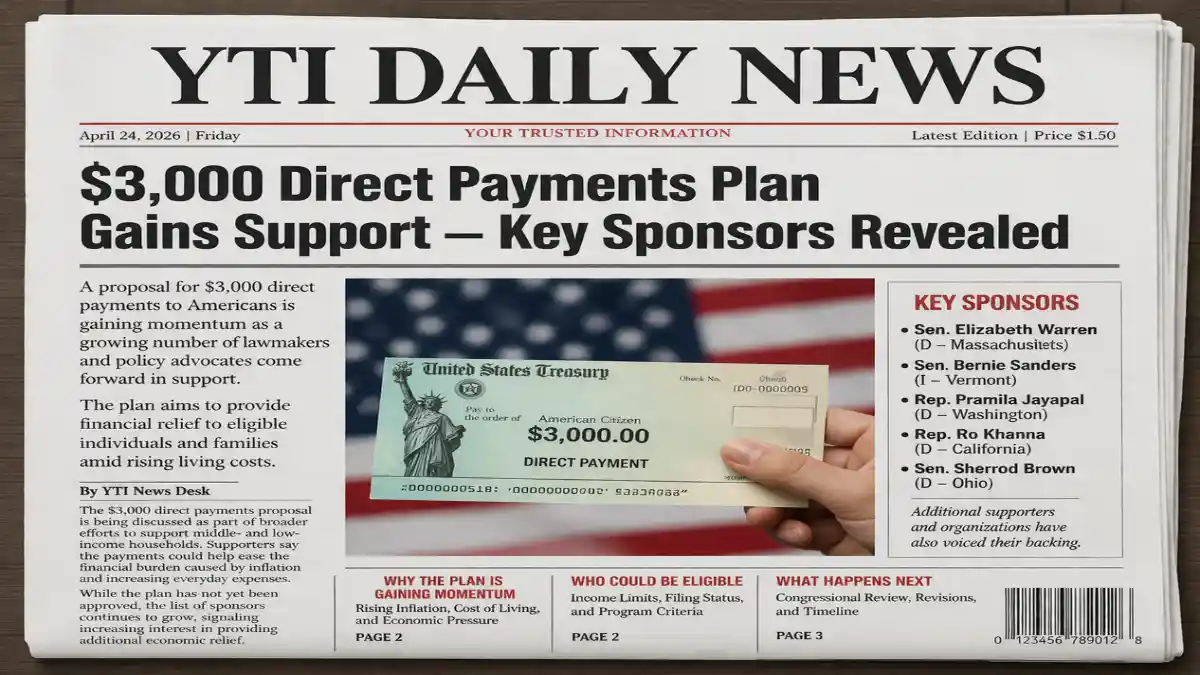
A proposal for $3,000 direct payments to Americans is gaining attention as support builds among lawmakers and policy advocates. While the plan is still under discussion, its growing backing has sparked interest across the country.
What Is the $3,000 Direct Payment Plan?
The proposal aims to provide financial relief to eligible Americans through direct payments.
- One-time or structured payments up to $3,000
- Designed to support middle- and low-income households
- Intended to help with rising living costs
The plan is part of broader discussions around economic support and financial stability.
Who Is Supporting the Plan
Several lawmakers and policy groups have expressed support for the proposal.
- Members of Congress advocating for financial relief
- Economic policy groups focused on affordability
- Support from leaders addressing cost-of-living concerns
The list of sponsors continues to grow as discussions move forward.
Why the Plan Is Gaining Momentum
The proposal is receiving attention due to current economic conditions.
- Rising inflation and living expenses
- Increased financial pressure on households
- Ongoing discussions about economic support programs
These factors are driving interest in additional relief measures.

Who Could Be Eligible
If approved, eligibility would likely depend on several criteria.
- Income thresholds
- Tax filing status
- Household size
- Participation in existing federal programs
Exact details will depend on final legislation.
What Happens Next
The proposal is still in the early stages and must go through several steps.

- Debate and approval in Congress
- Possible revisions to payment structure
- Final approval and implementation timeline
No official payment dates have been confirmed yet.
Important Note
At this stage, the $3,000 direct payment plan is a proposal and has not been officially approved. Any updates will depend on legislative progress and government decisions.
Final Thoughts
The $3,000 direct payments proposal is gaining attention as support increases among lawmakers. While not yet finalized, it reflects ongoing efforts to provide financial relief to Americans facing economic challenges.